Alcohol Detox is an essential process for an individual to remove toxic substances from the body that develop due to chronic alcohol consumption. Detoxification from alcohol is the initial step toward a safe, productive, and healthy life. Many people ask about the best way to detox at home as compared to medical detox. It requires supervision for alcohol detox management to reduce the risk of complications. The decision depends on several factors such as the severity of dependence, etc.
The purpose of this article is to find out the difference between Medical Detox and Detox at home. Choosing the right detox could save your life. But before that, it is necessary to understand Detox.
What Is an Alcohol Detox?
Alcohol detox can be defined as removing alcohol from the body. “De” means “removal” while “tox” represents the short form of “toxicity”. When an individual drinks excessive alcohol for a longer time, the body becomes dependent and requires detoxification. Alcohol detoxification is a process of removing alcohol and supporting the safe management of alcohol withdrawal symptoms. This process requires a few days to three weeks, approximately. The duration of the process depends on the duration of alcohol intake and the quantity as well.
How Alcohol Affects the brain: Understanding the causes
Long-term alcohol consumption disrupts the balance of neurotransmitters and brain functioning, resulting in alcohol withdrawal symptoms when drinking is stopped. As a result of alcohol detoxification, GABA and Glutamate are the underlying causes of withdrawal symptoms.
Alcohol increases the activity of gamma-aminobutyric acid (GABA), a neurotransmitter which relaxes the brain, while decreasing glutamate, which enhances brain activity. GABA activity decreases while glutamate surges, causing symptoms including anxiety, tremors, and seizures. To cope with alcohol withdrawal symptoms, Medical detox can offer effective treatment to address the underlying brain imbalance.
Alcohol detox timeline:
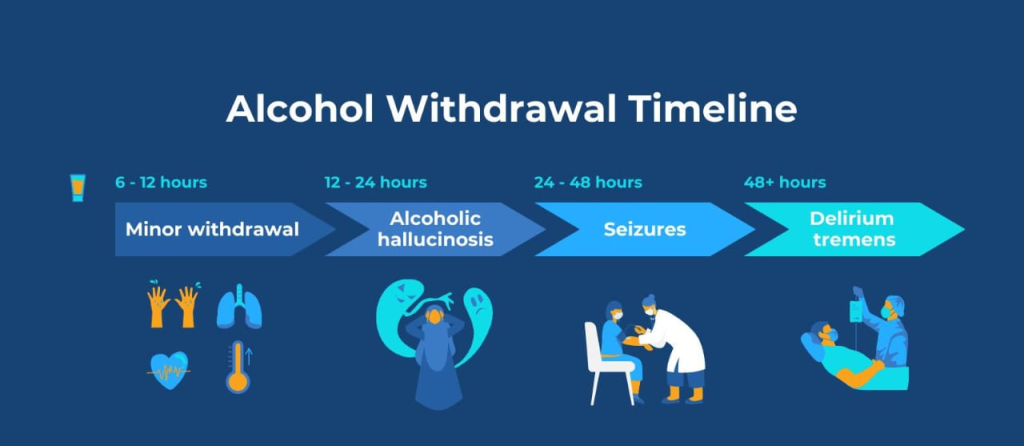
The Alcohol detox timeline depends on several factors such as age, severity, and dependence. Even so, alcohol withdrawal symptoms appear within 6-12 hours after the last drink. Also, it can persist for days, even for 40-48 hours. A medically-assisted withdrawal on time helps to stop serious complications by keeping a proper record of the patient’s condition.
Dangers of Alcohol Withdrawal
Individuals who are chronically alcohol addicted can experience life-threatening symptoms such as:
- Seizures
- Delirium
- Wernicke-Korsakoff syndrome
- Sleeplessness
- Anxiety
- Electrolyte imbalance
- Tachycardia
However, Alcohol withdrawal can take some time to reduce, especially for heavy drinkers. It still requires medical assistance or can be a home detox for some people.
Is it safe to detox at home?
Alcohol Detox is a valuable option for people living with moderate alcohol dependence. Alcohol detox at home has its pros and cons depending on the condition of the person. However, it is vital to consider the risks. Home‐based detoxification shows potential as a safe and patient‐preferred intervention. Still, it can give rise to complications without supervision, even though more research is required to assess its broader effectiveness and feasibility across various substances. If you are considering home detox, here are the pros and cons:
Pros:
- Family Involvement
- Comfortable
- Affordable
- Easily scheduled
Cons:
- Challenges that can affect psychologically
- Severe risk of life-threatening withdrawal symptoms
- Easy to relapse without proper structure
- Lack of 24/7 medical monitoring
Additionally, it is essential to consult with professionals for proper guidance while choosing an at-home detox challenge.
Medical Detox: The Safer, Smarter Option
Medical detox is a supervised treatment in a hospital or rehab center, specially designed to help you safely manage withdrawal. Medical detox is a valuable option for people who suffer alcohol withdrawal symptoms from moderate to severe alcohol withdrawal symptoms. Also, medical detox offers 24/4 service and support from experienced healthcare professionals.
In recent research, the reports of patients indicate that intervention by alcohol specialist nurses occurs during and after unplanned withdrawals in a hospital setting. This can help orient patients towards change and promote an early recovery.
The pros and cons of medical detox: what you need to know
Medical detox is surely a popular option for an addicted person to overcome the withdrawal symptoms. Understanding the pros and cons is crucial before making a decision.
Pros:
- 24/7 Medical Supervision
- Medication-Assisted Treatment (MAT)
- Management of Co-occurring Conditions
- Management strategy to prevent relapse
- Customized detoxification plans
- Nutritional Support
- Emotional and Psychological Recovery
- Foundation for Long-Term Recovery
Cons:
- Cost-effective
- Privacy is limited
- ADLs (Activities of Daily Living) get affected
- Emotional Discomfort
However, despite potential drawbacks, medical detox is the best option to get treated under supervision.
Alcohol Detox Management: Road to recovery
Alcohol detox management requires some time for a successful recovery. It includes a comprehensive approach to managing Alcohol withdrawal symptoms, whether it’s mild or severe. It also requires a comprehensive approach to manage symptoms and support overall health with the following components:
- Setting a detox start date
- Removing all alcohol from your home
- Any caregiver or staff member monitoring your progress
- Good hydration and having healthy meals
In order to choose the best treatment option, whether medical detox or home detox, a well-managed treatment must be considered. At Revive Roots Recovery, our medical professionals are experienced and qualified to offer patients a comprehensive treatment program. It will help them overcome cravings, treat withdrawal side effects, and prepare patients for the future.
Final Thoughts, Don’t Wait:
If you’re ready to break free from alcohol, detoxification should be your first option —but it needs to be the right kind of detox. The right type of detox means it should be managed systematically. At-home detox may sound appealing, but it comes with real dangers. Medical detox offers safety, support, and a strong foundation for recovery.
At Revive Roots Recovery, we offer professional medical detox programs to ensure a safe and supportive environment for our beloved clients. Don’t take chances with your health. If you or a loved one is struggling, reach out to us at Revive Roots Recovery to get a personalized detox facility today.
Reference list
Allan, C. (2000). DETOXIFICATION FROM ALCOHOL: A COMPARISON OF HOME DETOXIFICATION AND HOSPITAL-BASED DAY PATIENT CARE. Alcohol and Alcoholism, 35(1), pp.66–69. doi:https://doi.org/10.1093/alcalc/35.1.66.
Christensen, A.-S. and Elmeland, K. (2015). Former heavy drinkers’ multiple narratives of recovery. Nordic Studies on Alcohol and Drugs, 32(3), pp.245–257. doi:https://doi.org/10.1515/nsad-2015-0024.
Diaper, A.M., Law, F.D. and Melichar, J.K. (2014). Pharmacological strategies for detoxification. British Journal of Clinical Pharmacology, 77(2), pp.302–314. doi:https://doi.org/10.1111/bcp.12245.
Substance Abuse and Mental Health Services Administrat (2023). 2021 NSDUH Annual National Report | CBHSQ Data. [online] www.samhsa.gov. Available at: https://www.samhsa.gov/data/report/2021-nsduh-annual-national-report.